

A boiler ID fan removes hot flue gases from the boiler system and helps maintain negative draft inside the furnace, gas path, dust collector, and chimney route. In practical plant operation, the ID fan is not only an exhaust fan. It directly affects combustion stability, furnace pressure, emission-control airflow, fuel burning quality, and boiler room safety.
When I review a boiler ID fan requirement, I do not start with motor HP alone. I first check airflow, static pressure, gas temperature, dust load, duct resistance, fuel type, pollution-control equipment, impeller type, material of construction, and actual operating duty.
What Is a Boiler ID Fan?
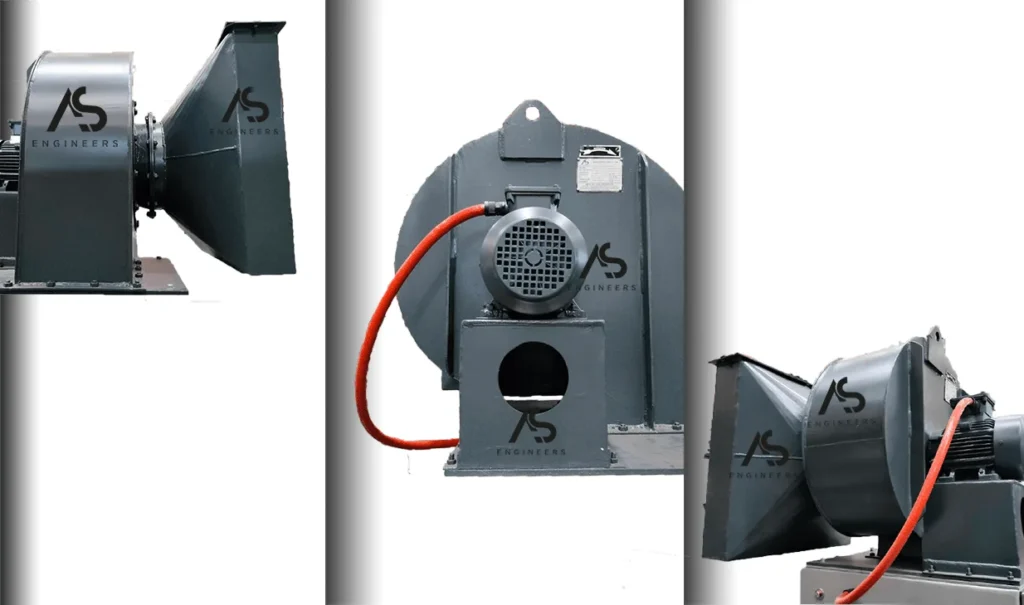
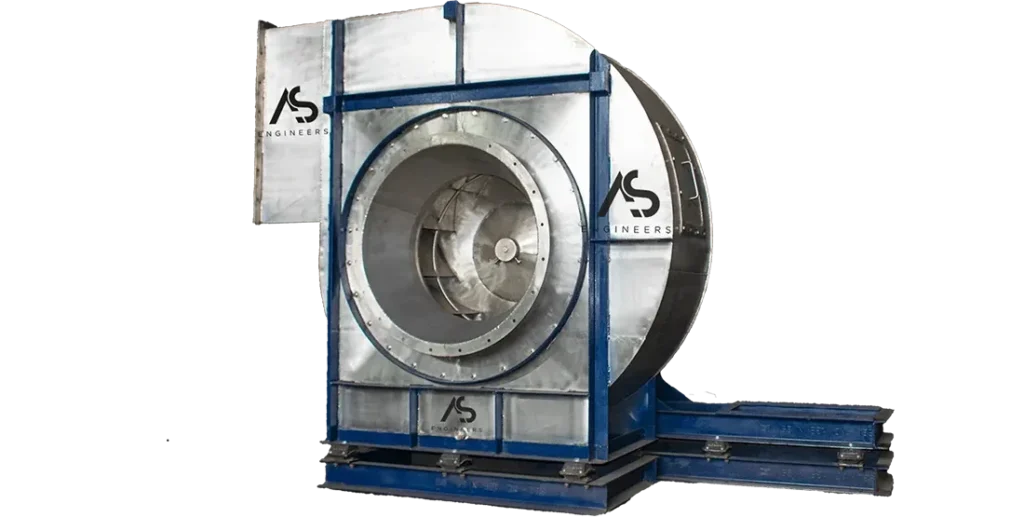
A boiler ID fan, or induced draft fan, is a centrifugal fan used to draw combustion gases from the boiler and discharge them toward the chimney or stack. It is normally installed on the downstream side of the boiler gas path, often after equipment such as an economizer, air preheater, dust collector, bag filter, cyclone, scrubber, or ESP, depending on the plant layout.
The word “induced” is important. The fan induces draft by pulling flue gas through the system. This creates a controlled negative pressure so that combustion gases move in the intended direction instead of escaping through furnace doors, inspection openings, duct joints, or weak sealing points.
For broader ID fan basics, the supporting guide on how ID fans work can be linked from this section.
Boiler ID Fan Function in a Draft System
The main function of a boiler ID fan is to maintain the required gas flow through the boiler. It pulls flue gas from the combustion zone, through heat-transfer passages and pollution-control equipment, and then toward the chimney.
In a boiler system, this airflow path usually looks like this:
| Stage | What Happens | ID Fan Relevance |
|---|---|---|
| Combustion chamber | Fuel burns and produces hot flue gases | Gas must be removed continuously |
| Boiler passes | Flue gas transfers heat to water/steam circuit | Draft must overcome system resistance |
| Dust/pollution-control equipment | Particulate or pollutant load is handled | Fan must handle pressure drop across equipment |
| ID fan | Gas is pulled through the system | Maintains negative draft and flow |
| Chimney/stack | Treated flue gas is discharged | Fan supports stable stack discharge |
A weak or incorrectly selected ID fan can disturb the full draft path. A plant may see poor combustion, smoke leakage, furnace pressure fluctuation, reduced boiler output, high vibration, excessive power consumption, or repeated fan trips.
Why Negative Draft Matters in Boilers
Negative draft means the furnace pressure is kept slightly below atmospheric pressure. This is one of the key reasons ID fans are used in industrial boilers.
Negative draft helps in three practical ways:
First, it guides flue gas in the correct direction. The gas moves from furnace to stack instead of leaking into the boiler house.
Second, it supports combustion stability. If flue gases are not removed properly, fresh combustion air from the FD fan cannot enter and mix properly with fuel.
Third, it protects operators and nearby equipment from unwanted flue gas leakage. This is especially important where the fuel, soot, ash, or exhaust stream can create unsafe working conditions.
The important point is control. Too little draft creates gas escape and poor firing. Too much draft can pull excess air through the system, disturb flame stability, increase heat loss, and overload the fan. Good boiler operation needs controlled draft, not maximum suction.
Boiler ID Fan vs FD Fan
Boiler plants often use both ID fans and FD fans. They are connected, but their duties are different.
| Point | ID Fan | FD Fan |
|---|---|---|
| Full form | Induced Draft Fan | Forced Draft Fan |
| Main duty | Pulls flue gas out of the boiler | Pushes fresh air into the boiler |
| Pressure effect | Creates negative draft | Creates positive air supply |
| Normal location | After boiler gas path, before stack/chimney | Before burner, windbox, or combustion air path |
| Gas handled | Hot flue gas, dust, ash, fumes, moisture, corrosive content depending on process | Fresh or preheated combustion air |
| Selection concern | Temperature, dust load, erosion, corrosion, pressure drop, impeller type | Air volume, combustion requirement, pressure, air preheater resistance |
| Failure impact | Gas evacuation problem, furnace pressure issue, smoke leakage, boiler trip risk | Combustion air shortage, poor flame, reduced firing capacity |
For users comparing both systems, add an internal link to forced draft fans in boiler systems and comparing FD fan and ID fan.
Where the Boiler ID Fan Fits in the System
In many industrial boiler layouts, the ID fan is placed after the boiler and before the chimney. Depending on the plant, it may pull gas through:
- Furnace and combustion chamber
- Boiler bank or heat-transfer passes
- Economizer
- Air preheater
- Cyclone separator
- Bag filter
- Scrubber
- ESP or other dust-collection equipment
- Chimney or stack ducting
This placement means the ID fan must be designed for actual downstream resistance. A fan selected only from a basic CFM number may fail when duct length, bends, dampers, ash load, dust collector pressure drop, temperature correction, and chimney resistance are added later.
That is why boiler ID fan selection should be based on the full system curve, not only the fan catalogue point.
Why Boiler ID Fans Are Important
A boiler can have a good burner, proper fuel supply, and correct FD air, but still perform poorly if flue gas evacuation is unstable. The ID fan is important because it controls what happens after combustion.
Combustion Stability
Combustion needs fuel, air, ignition, and proper gas movement. If flue gases remain inside the furnace longer than required, oxygen availability and flame behavior can become unstable. A properly selected ID fan helps remove exhaust gases and allows the combustion air system to work as intended.
This does not mean the ID fan alone improves efficiency. Efficiency depends on the full boiler system, burner tuning, fuel quality, air-fuel ratio, heat recovery, insulation, operation, and maintenance. The ID fan supports that system by keeping draft movement stable.
Operator Safety and Gas Leakage Control
A boiler ID fan helps maintain inward air movement at leakage points by keeping the furnace under negative pressure. This reduces the chance of hot flue gases escaping into the work area.
Any safety-critical condition, such as gas leakage, abnormal furnace pressure, flame instability, or repeated fan trip, should be handled according to site safety procedures, OEM instructions, and qualified boiler personnel. Content on this page should not replace plant-specific operating instructions.
Pollution-Control Performance
In many boiler installations, flue gas passes through pollution-control equipment before discharge. The ID fan must overcome the resistance of these devices and maintain the required gas flow through them.
For example, if a bag filter, cyclone, scrubber, or ESP adds pressure drop, the fan must be selected with that pressure drop in mind. If the pressure drop rises because of dust build-up, wet deposits, choking, or damaged filter media, the fan may run outside its intended operating zone.
For related application pages, use internal links to ID fans in the boilers industry and ID fans in air pollution control.
Boiler ID Fan Selection Factors
A boiler ID fan is not selected only by airflow and motor HP. The right design depends on the full operating condition.
| Selection Input | Why It Matters |
|---|---|
| Airflow / gas volume | Defines required flue gas handling capacity |
| Static pressure | Must cover ducting, boiler passages, pollution-control equipment, dampers, bends, and stack resistance |
| Gas temperature | Affects gas density, fan design, bearing arrangement, expansion, and material suitability |
| Dust load | Influences impeller erosion, casing wear, balancing, and cleaning frequency |
| Gas composition | Can affect corrosion risk and material selection |
| Fuel type | Coal, biomass, gas, oil, and solid fuels create different ash, soot, and gas profiles |
| Impeller type | Radial, backward curved, or other designs may suit different pressure and dust conditions |
| MOC | Material must match temperature, dust, corrosion, and wear condition |
| Speed and drive arrangement | Affects performance, vibration, maintainability, and energy use |
| Site condition | Altitude, ambient temperature, layout, duct route, and access affect final selection |
AS Engineers’ centrifugal blower source data lists selection considerations such as application, density, temperature, dust load, humidity, site location, altitude, material of construction, impeller blade design, and motor mounting arrangement. The same thinking is highly relevant for boiler ID fan selection.
For deeper selection support, use ID fan design, selection criteria and operation as an internal link.
Common Boiler ID Fan Problems
Many boiler ID fan failures are not caused by the fan alone. They often come from changed plant conditions, poor duct design, ash build-up, dust collector choking, incorrect damper position, alignment issues, or inadequate maintenance.
| Problem | Common Plant-Side Causes | What to Check |
|---|---|---|
| Low draft | Duct leakage, fan undersizing, choking, worn impeller, wrong rotation, high system resistance | System resistance, damper position, impeller condition, fan speed |
| Excessive vibration | Impeller dust build-up, imbalance, bearing wear, foundation looseness, misalignment | Vibration trend, cleaning, balancing, bearing condition, alignment |
| High motor load | High gas volume, high pressure drop, wrong damper control, density change, fan operating away from duty point | Motor current, gas temperature, damper position, system curve |
| Bearing overheating | Lubrication issue, misalignment, high vibration, excessive temperature transfer | Lubrication, bearing temperature, coupling, cooling arrangement |
| Noise | Turbulence, loose components, unstable operation, duct resonance, bearing issue | Duct layout, fan casing, rotor condition, bearings |
| Frequent tripping | Electrical overload, high vibration, process fluctuation, blocked duct/filter | Protection settings, motor load, fan health, process conditions |
| Erosion | High ash or dust load, unsuitable impeller material, high velocity zones | Impeller wear pattern, dust loading, MOC suitability |
| Corrosion | Acidic gases, condensation, wrong material, low-temperature zones | Gas dew point risk, casing condition, material selection |
For troubleshooting support, add internal links to common ID fan issues and technical troubleshooting for ID fans.
Maintenance Priorities for Boiler ID Fans
Boiler ID fan maintenance should be preventive, not only breakdown-driven. A fan may continue running for some time even when vibration, dust build-up, bearing stress, or alignment error is increasing. Waiting until the fan trips can create higher downtime risk.
Useful maintenance checks include:
- Inspect impeller for dust build-up, erosion, cracks, or uneven wear
- Check fan casing and duct joints for leakage or wear
- Monitor bearing temperature and lubrication condition
- Track vibration trends, not only one-time readings
- Check coupling alignment and foundation bolts
- Confirm damper movement and position feedback
- Inspect belts, pulleys, guards, and drive condition where applicable
- Check motor current against operating load
- Review gas temperature and process changes
- Clean ash, soot, or deposits that affect balance and airflow
- Verify that pollution-control equipment pressure drop is within acceptable plant limits
This is where maintenance teams should connect fan behavior with the process. If vibration increases after a fuel change, dust collector issue, or shutdown-startup cycle, the root cause may be outside the fan body.
Link this section to ID fan maintenance dos and don’ts and servicing and maintaining your ID fan.
Boiler ID Fan Applications by Industry
Boiler ID fans are used in many industries where combustion systems, steam generation, hot gas handling, and emission-control systems are present.
| Industry | Boiler ID Fan Requirement |
|---|---|
| Power plants | Furnace draft, ESP/bag filter gas movement, stack discharge |
| Chemical plants | Boiler exhaust, process heating systems, fume or gas handling around utility systems |
| Cement plants | Hot gas movement, dust-loaded exhaust, kiln and boiler-linked draft duties |
| Steel and metals | High-temperature exhaust, dust-loaded gas paths, furnace and boiler support |
| Food processing | Steam boiler draft for process heating and drying support |
| Textile plants | Boiler exhaust for steam generation used in processing |
| Pulp and paper | Boiler and recovery-area exhaust handling |
| Pharmaceutical plants | Utility boiler draft where clean, controlled process support is required |
For broader industry mapping, use internal links to ID fans in power generation, ID fans in cement industry, and ID fans in chemical processing.
How to Prepare a Boiler ID Fan RFQ
A strong RFQ reduces wrong selection, rework, and later performance disputes. Purchase teams should not send only “required HP” or “existing fan photo.” The fan supplier needs actual duty data.
Send these inputs wherever possible:
| RFQ Input | Details to Share |
|---|---|
| Boiler type and capacity | Steam rating, fuel type, operating pattern |
| Required gas volume | CFM, m³/hr, or Nm³/hr with operating condition |
| Static pressure | Required pressure, system pressure drop, chimney resistance |
| Gas temperature | Normal, maximum, and startup condition if relevant |
| Dust/ash load | Fuel ash behavior, dust collector condition, particulate load |
| Gas composition | Moisture, corrosive gases, fumes, or process contaminants |
| Existing fan data | Fan tag, impeller size, RPM, motor HP, damper details |
| Duct layout | Length, bends, dampers, expansion joints, filter/scrubber/ESP position |
| MOC expectation | Existing material, wear history, corrosion issues |
| Site constraints | Space, foundation, inlet/outlet orientation, access for maintenance |
| Control method | Damper, VFD, manual control, automation signal |
| Failure history | Vibration, bearing failure, erosion, low draft, high motor load |
At AS Engineers, the blower review can include performance analysis, engineering surveys, retrofitment, repair, material identification, on-site alignment, on-site balancing, customized engineering solutions, and AMC support where applicable. For cross-domain support, connect this page to AS Engineers’ boiler fan and ID fan manufacturer page and the ID and FD fans explanation.
When Should You Replace or Upgrade a Boiler ID Fan?
Replacement is not always the first answer. Some issues can be solved through cleaning, balancing, alignment, duct correction, impeller repair, motor review, or operating correction. But replacement or upgrade should be evaluated when:
- The fan cannot achieve required draft even after cleaning and system checks
- Impeller wear has reduced performance or created recurring imbalance
- Gas temperature, fuel type, or dust load has changed from original design
- Boiler capacity has increased but fan capacity has not
- Pollution-control equipment has been added or modified
- Motor overload or high power draw is recurring
- The fan design is unsuitable for current ash, corrosion, or process conditions
- Spare parts availability or repeated shutdown cost is becoming a risk
The decision should be based on duty data and inspection, not guesswork. A new fan with the same old selection mistake will repeat the same problem.
FAQs
What is the main function of a boiler ID fan?
The main function of a boiler ID fan is to pull flue gases out of the boiler and move them toward the chimney or stack. It also helps maintain negative draft inside the furnace so combustion gases travel in the correct direction through the boiler gas path and pollution-control equipment.
What is the difference between an ID fan and an FD fan in a boiler?
An FD fan pushes fresh combustion air into the boiler, while an ID fan pulls flue gases out of the boiler. The FD fan supports air supply for burning fuel. The ID fan supports exhaust removal, negative draft control, and gas movement toward the stack.
Why does a boiler need negative pressure?
A boiler needs controlled negative pressure to prevent flue gases from escaping into the boiler room and to keep combustion gases moving toward the chimney. Too little draft can cause smoke leakage and unstable combustion. Too much draft can create excess air and heat loss.
What causes high vibration in a boiler ID fan?
High vibration can come from dust build-up on the impeller, rotor imbalance, bearing wear, coupling misalignment, foundation looseness, casing distortion, or fan operation away from the design point. In boiler duty, ash and soot deposits are common causes and should be checked before assuming motor failure.
What data is required to select a boiler ID fan?
A proper boiler ID fan selection needs airflow, static pressure, gas temperature, dust load, fuel type, gas composition, duct layout, chimney resistance, pollution-control equipment pressure drop, MOC requirement, impeller type, RPM, motor rating, site layout, and control method.
Conclusion
A boiler ID fan is one of the most important components in the boiler draft system. It removes flue gases, maintains negative pressure, supports combustion stability, and helps move exhaust through pollution-control equipment and the chimney. But its performance depends on correct selection, clean airflow path, proper impeller design, suitable material, stable alignment, and disciplined maintenance.
For boiler plants, the safest buying approach is to share complete duty data before selection. Airflow, pressure, temperature, dust load, fuel type, duct resistance, MOC, impeller condition, and service history all matter.
If your boiler ID fan is facing low draft, vibration, high motor load, repeated bearing issues, dust build-up, or performance mismatch, AS Engineers can review the duty condition and help with suitable fan selection, service, retrofitment, alignment, balancing, or replacement guidance.

Karan Dargode works with AS Engineers, contributing practical insights on industrial fans, ID fans, FD fans, high-pressure blowers, paddle dryers, sludge dryers, and process equipment used in demanding plant environments. His writing focuses on equipment selection, reliability, maintenance, application fitment, and clear technical guidance for industrial buyers and plant teams.